 Advanced Nutrition Network
Potassium up.
Sodium down.
Almost everything here follows from one ratio. Your cells run a constant exchange, sodium out and potassium in, and most modern diets invert the balance the body evolved to expect.
This site does three things. It publishes the potassium-to-sodium ratio of everyday foods so you can see where any of them sits. It documents a fourteen-day protocol built around correcting that balance. And it covers the equipment worth owning if you decide to cook this way, based on using it rather than reading about it.
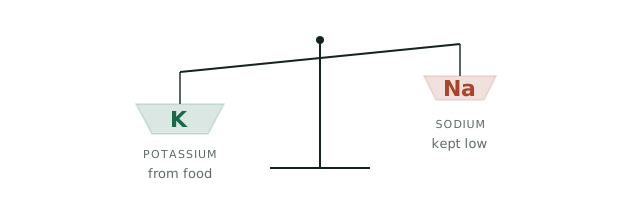
Why the ratio and not the sodium number
Sodium gets the attention because it is the number on the front of the packet. The relationship between the two minerals tells you more, because that relationship is what your cells respond to. A food can be moderate in sodium and still sit on the wrong side of the line if it brings no potassium with it. Cheese is the clean example. It is not extraordinarily salty by processed-food standards, and it still inverts the ratio.
Every entry in the database shows both numbers and the ratio between them, given per 100 g so foods compare directly.
Guidance changes. The chemistry doesn't.
In January 2026 the federal dietary guidelines were rewritten and the food pyramid was turned upside down. Grains came off the base. Protein and healthy fats moved to the top. It is a useful reminder that official advice is a moving target, and a good argument for understanding the underlying numbers yourself.
What changed in the 2026 guidelines →
Where the ideas came from
The sodium-potassium relationship is not new. Max Gerson was building diets around it in the 1930s. Linus Pauling and Paul Bragg each approached similar territory from different directions. The library introduces their work and points you to their own writing.