 Advanced Nutrition Network
The Sodium-Potassium Balance
One mechanism sits underneath everything else on this site. It is worth ten minutes to understand properly.
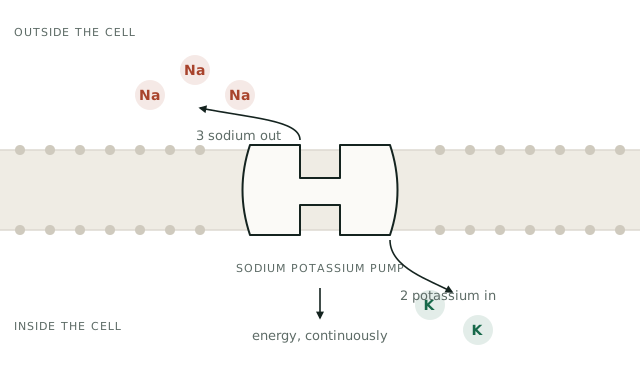
The pump
Every cell in your body maintains a difference between what is inside it and what is outside. Potassium concentrates inside. Sodium stays mostly outside. That difference is not passive. It is actively maintained by a protein in the cell membrane that pushes sodium out and pulls potassium in, burning energy continuously to do it.
This is the sodium-potassium pump, and it is one of the largest single consumers of energy in the body at rest. Estimates vary, but a meaningful share of your basal metabolism goes to running it, every second, in every cell.
What the gradient does
Nerve signals are the gradient collapsing and rebuilding. Muscle contraction depends on it. Cell volume depends on it, which is why the balance shows up as puffiness in your face and tightness in your rings. Nutrient transport across the cell membrane is often coupled to it as well, riding sodium's route back in.
When people describe feeling lighter and clearer during the reset, this is the system they are describing, even if nobody uses the vocabulary.
Where modern eating goes sideways
The diet this machinery evolved alongside was rich in potassium and low in sodium. Plants carry potassium. Very little in nature carries much sodium.
Contemporary eating reverses the proportions. Most of the sodium arrives in processed food rather than from the salt shaker: bread, deli meat, canned soup, sauces, restaurant cooking. At the same time potassium intake falls short of recommendations for most adults, because that requires eating a serious volume of produce.
The result is a ratio the pump was not designed around. Not a poison, and not a crisis. Just a persistent load.
Why ratio rather than sodium alone
Sodium gets the headlines because it is on the label. The ratio tells you more, because the two minerals work against each other. A food carrying moderate sodium and good potassium can sit on the right side of the line. A food carrying moderate sodium and no potassium does not.
This is why the database publishes both numbers and the ratio between them rather than ranking foods by salt content.
What fourteen days can and cannot do
Fourteen days is enough to shift water balance, and enough to recalibrate a palate that has spent years adjusting upward on salt. Those two changes are real and most people notice them.
It is not enough to change body composition, and no honest reading of the mechanism suggests otherwise. What the fortnight gives you is information about your own baseline.
Who should be careful
Potassium is tightly regulated by the kidneys. If your kidneys are not working normally, or if you take medication that affects potassium handling, including ACE inhibitors, ARBs, and potassium-sparing diuretics, then loading up on potassium is genuinely risky rather than theoretically risky. Speak to your doctor before starting.