 Advanced Nutrition Network
Cold Press Juicers
As an Amazon Associate I earn from qualifying purchases. This costs you nothing extra. Everything recommended here is in daily use.
The carrot and green apple juice is the optional part of the protocol I would most encourage you not to skip. Six ounces in the morning delivers a substantial amount of potassium before you have eaten anything, plus the malic acid in green apples.
It only works fresh. Enzymes begin degrading the moment juice meets air, so drink it within fifteen minutes. Bottled juice has been pasteurised, and heat undoes the thing you are buying it for.
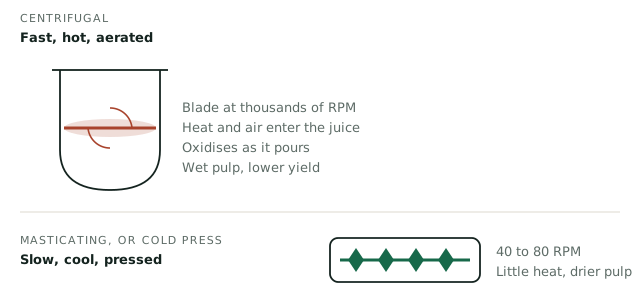
The only decision that really matters
Centrifugal juicers spin a blade at high speed and fling juice through a mesh screen. Fast, cheap, loud. The speed generates heat and whips air into the juice, which oxidises it.
Masticating juicers, also called cold press or slow juicers, use a slow-turning auger to crush and press produce against a screen. Little heat, little oxidation, higher yield, drier pulp. Quieter, and more expensive.
Buy masticating. The point is the living enzyme content. Spending on a centrifugal machine to make juice that oxidises as it pours defeats the purpose.
If a cold press is out of budget, the honest answer is to skip the juice. The protocol works without it.
Vertical or horizontal
Vertical models take less counter space and often have wider chutes, so less chopping. Best for most people.
Horizontal models handle leafy greens and wheatgrass better, tend to be more durable, and often double as nut butter or nut milk machines. They take more space.
For carrots and apples either works. What matters is motor torque, not orientation.
What to look for
- Auger speed of 40 to 80 RPM. Slower means less heat.
- A wide feed chute. This sounds trivial and is not. Prep time is the single most common reason a juicer stops getting used.
- Simple cleaning. Count the parts. If cleanup takes ten minutes you will find reasons not to juice.
- A long motor warranty. Quality machines carry ten to fifteen years.
- A reverse function. Carrots jam things.
What to skip
Centrifugal machines. Anything with a motor too weak for carrots, which is most of the budget end. Manual presses, fine for wheatgrass and impractical for daily carrot juice. Machines with twenty parts. Juicer and blender combination units, which usually do neither well.
What I use
A Hurom H330, nearly every morning I am in the States. Self-feeding hopper, strainer-free, fifteen-year warranty.
The full review after a year of daily use →
The recipe
Three to four medium carrots and one large green apple. Press, drink within fifteen minutes. Green apple rather than red, because malic acid content is higher and that is why the apple is in the glass.